Showing posts with label Music Education. Show all posts

Saturday, June 19, 2010

LIVE MUSIC DYING IN MALAYSIA


By Joe Chelliah

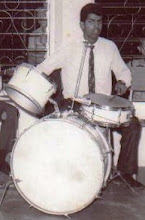
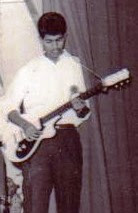
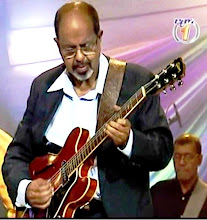
I am often amused by advertisements that proclaim “live” band performances in hotels, clubs or lounges with pictures of the band members posing admirably. What I get to see most often is a band that comprises of three lady singers as front liners and another male or female behind a keyboard with a laptop at the side. Except for the vocals and the dancing, there is absolutely nothing live about the music though. The music tracks played are produced through pre-programmed MIDI files that are easily downloaded from the internet and reproduced through laptops. The keyboardist usually pretends to play but probably would not know where the Middle C note is. This is what live music has become in Malaysia today.

Live music in the strictest sense of the word is music that is actually performed live and in real time by real musicians and singers. Even the rhythms must be produced live on the drums. Live music is all that is opposed to any music reproduction of sound recordings from a CD, a DVD or any other electronic means. Live bands were performing from kampong weddings to five star hotels till quite recent times. There was a bubbly live band culture in the past in Malaysia. Even commercial recordings had live musicians performing unlike today. Such a true live band culture still prevails in the Philippines, Indonesia and India while it is dying out in Malaysia. Except for a couple of clubs, traditional music and the few orchestras including the “infamous” dangdut scene, live music in Malaysia is a thing of the past and dying if not already dead. What a pity and what a shame?

Saturday, September 5, 2009

RECTIFY MUSIC EDUCATION IMPLEMENTATION, NOT THROW IT OUT


Former Education DGs Tan Sri Haji Murad bin Mohamed & Tan Sri Dr. Abdul Rahman Arshad were true educationists


Malaysian educationists such as the late Tan Sri Datuk Haji Murad backed by the then policy makers realized back in the 1980’s that the school curriculum had become too academic and wisely introduced music as a compulsory subject in all primary schools to offset the imbalance. The government fully backed this move and has thus far spent billions to put music study at all levels of education in Malaysia. Now after thirty years, the Ministry of Education is planning to cut time allocation for music in the school curriculum. This is something that needs to be reconsidered. One may ask why music education is now being given such a low priority ranking after nearly a quarter century of public music education.

The KBSR generation is now at least thirty years old and had been exposed to formal music education for at least six years. As a consequence we should see informed music appreciation and also an active and bubbling live music culture in Malaysian society? Sadly, this is not happening. It is well known that a tree is known by its fruit. Malaysian parents clearly do not see the “fruits of music education”. Desired outcomes of a well orchestrated music program in the primary schools should be such things as the ability to appreciate and talk intelligently about music in its variant forms.

So what do we do with a tree that does not bear fruit? Apparently questions such as these have begun to surface amongst education planners and in the mind of the Honorable Minister himself. Perhaps we might have been taking a wrong approach to music education all along? Perhaps focus should have been more on a sound music appreciation program of the “penyuburan diri” type rather than dreary theory and recorder drills so prevalent in many schools which non-musical music teachers prefer to do. There is a dearth of empirical studies on such matters which is within the purview of the so many universities that offer music studies even up to graduate levels in Malaysia today.

The government, children, parents and classroom music teachers are not at fault here. I feel that the fault lies squarely in the planning, administration and implementation aspects of music education since 1983 itself. Sadly, this aspect has always been in the hands bureaucrats and not professionals such as music educationists or those qualified in music education management. Even those with tertiary music qualifications who are put in charge of music education planning are not screened properly. For instance, when selections are made the background of the candidate's university or the transcripts are not looked into. The transcripts would show what subjects or courses were taken and of course the grades obtained by the candidate. The current and past practice allows anyone who shows a diploma (BA,MA or Phd) from overseas to be immediately allowed to hold any music education post that may not match his/her qualifications. For example someone who majored in piano or percussion may be put in-charge of curriculum development.

It is time for some serious reflection and rethinking on how we should approach music education to meet the desired aims and behavioral objectives. Cutting down “the music tree” is the not the wisest of things to do now simply because the study of music has so much to offer a child in personality development. It is hoped that the quality of music education implementation be investigated and improved instead. It must be remembered that a sound music education, directly benefits our children and is just as important as any other subject. Should it be reduced to just an educational frill?
A Cursory View of the Benefits of Music Education

1. Transmits the cultural heritage of a group to succeeding generations.
2. Helps students to achieve their full potential and be better citizens.
3. Helps students to wallow not only in popular music culture only but also opens doors to the
many other dimensions of joy that the study of music offers..........even for the non-musically
talented.
4. Brings a sensible balance to the curriculum (besides the two hemispheres of the brain) .
between the arts and science subjects.
5. Provides opportunities for success for some students who have difficulty with other subjects
6. Exalts the human spirit and enhances the quality of life.

Tuesday, August 11, 2009

ANOTHER REASON FOR CHILDREN TO STUDY MUSIC FROM YOUNG


Scientists have discovered that music training has significant influences on the brain development of young children leading to improved memory over the course of a year. The fact that musical training changes the way the brain reacts to music might not be very surprising, but researchers also found that the musically trained children performed better in a memory test that is correlated with other skills such as literacy, verbal memory, visio-spatial processing, mathematics and intelligence.


Studies have also shown that older children taking music lessons show greater improvements in IQ scores and that the children taking music lessons improved on general memory skills that are correlated with non-musical abilities such as literacy, verbal memory, Visio spatial processing and mathematics than the children who did not take music lessons. There is enough research in this area to suggest that musical training has an effect on how the brain gets wired for general cognitive functioning related to memory and attention.


In particular, it is early music training that appears to most strengthen the connections between brain neurons and perhaps even leads to the establishment of new pathways. But research shows music training has more than a casual relationship to the long-term development of specific parts of the brain too.


These latest findings build even a stronger case for music study from the early school years itself besides the so many other traditional reasons. In spite of so much of such latest researched findings it is surprising and incomprehensible why the Ministry of Education is so bent on reducing the whatever little time that our children have for music in the primary schools now.

Friday, September 26, 2008

MUSICAL TALENT IS A MUST FOR THE MUSIC TEACHERS

That's Me Training a Choir at STTI in 1990

All is not well with our current public education system as we would like to believe. It is more so and troubling in so far as music education is concerned simply because there is a glaring reason which is constantly being overlooked and ignored. It is easy to teach anyone, young or old, to appreciate any kind of music and to experience its joys by merely listening to it. It is also easy to teach anyone cognitive aspects of music such as music history, pedagogy, theory fundamentals and so on. But you simply cannot teach music talent even through intensive training. That is what I have learnt after teaching student music teachers for 17 years at The Specialist Teacher Training Institute in Cheras (STTI/MPIK)

It is simply not possible to “teach” just anyone to be a music teacher. The potential music teacher’s innate musical talent is of paramount importance for without such musicality and musical talent, it is not possible to function effectively at all as a music teacher. If a music teacher cannot discriminate basic requirements such as pitch and rhythm correctly he/she is doomed. We can “train” such a person and give a music teacher’s certificate,a diploma or even a degree and pay the person accordingly but he / she is not going to be an efficient music teacher. This is something quite simple and straightforward which the planners at the Malaysian Ministry of Education have not been able to understand all these years or have simply chosen to ignore in order to meet numbers and quotas and also to please policy makers who may not be aware of this serious flaw. This situation must be rectified immediately.

Any program designed to produce music teachers should begin by taking in only musical persons with also some higher degree of intelligence. All other aspects of music teacher education like pedagogy, theory fundamentals, music appreciation etc. can be taught but musical talent can never be taught.

Any good music teacher must be able to inspire and motivate his / her students. To do this well in music classes, the teacher’s musical ability must be there at all times.
This is the main reason why the music programs in the Malaysian education system from primary to tertiary levels have failed since 1983. To borrow an analogy coined by Prof. Emeritus Dr. Khoo Kay Peng, let us replace the "old coat" instead of trying to keep mending it by “cutting, stitching and patching” it. In this way what we have now can only be best described as a terribly “torn, tattered and patched" coat which educational planners and policy makers are not willing to discard. There is no harm reinventing a new “coat” with past mistakes to avoid and guide us. Let’s do it now please. It’s already in the now or never stage.