Showing posts with label Thoughts on Society. Show all posts

Monday, March 28, 2011

MY CLOSE AFFINITY WITH NEGERI SEMBILAN

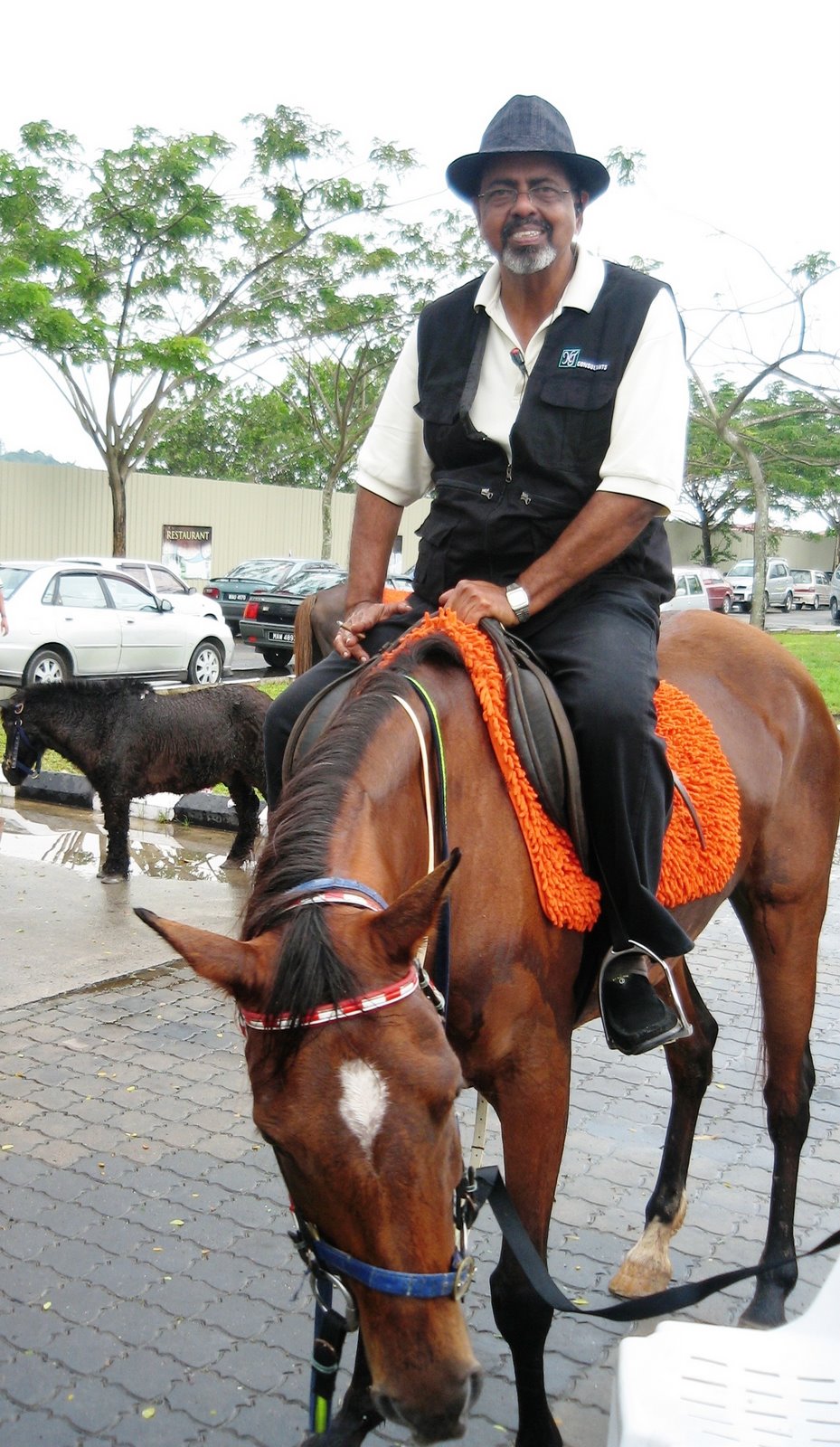
"Are  You Still Performing Joe?" Tuanku asked me.


Istana Lama Seri Menanti is Now A Museum


I grew up in Johor on the banks of the Sg. Muar at Nordanal Estate Panchor and underwent my entire schooling at the High School in Muar, Johor. In 1959 I sat for my Overseas School Certificate and moved to Seremban in Negeri Sembilan which has been my home ever since. 

I spent about twenty years teaching in the schools in Negeri Sembilan particularly in Tanjung Ipoh, Nilai, Bahau, Lenggeng, Kuala Pilah, Johol and Rembau. NS is the heartland of the Minangkabau culture. It was particularly during these early days that I also had many friends of my age who were from the Negeri Sembilan royalty. Since then I have developed a close affinity and fondness for Negeri Sembilan – its royalty, people, food, language and customs. It is my adopted home for the last 53 years. Even when I was posted to Kuala Lumpur as a lecturer at Maktab Perguruan Ilmu Khas in 1980 I decided to commute from Seremban till I retired in 1996. I still live in Seremban and still commute to KL for my events business ventures and music societies' involvements. I simply have come to love Negeri Sembilan.

Negeri Sembilan has aunique Minangkabau culture which still practices a complicated system of matriarchy society. A matriarchy is a society in which females, especially mothers, have the central roles of political leadership and moral authority including ownership of traditional lands.

“The Minangkabau ethnic group was originally indigenous to the highlands of West Sumatra, in Indonesia. Their culture is matrilineal, with property and land passing down from mother to daughter, while religious and political affairs are the responsibility of men. Today about 4 million Minangs live in West Sumatra, while about 3 million more are scattered throughout many Indonesian and Malay Peninsula cities and towns.” - (Wikipedia).

The Minangkabaus brought along with them a rich cultural heritage which is still preserved and practiced today as the fascinating ‘Adat Pepatih’, the name given to this matrilineal system of inheritance and administration that is unique to the state. The Minangkabaus of Sumatra came to settle in Negeri Sembilan in the 15th century. In its early history, Negeri Sembilan did not exist as a unified state. It was rather a loose confederation of nine fiefdoms which developed in the secluded valley of the region. They were under the protection of the Melaka Sultanate until its collapse in 1511 when the Portuguese arrived. 

Later attacks by the Bugis forced the Minangkabaus to seek protection from a prince from their homeland by the name of Raja Melewar of Pagar Ruyong. This resulted in the proclamation of Raja Melewar as the first Yam Tuan or the 'Yang Dipertuan Besar' (meaning 'He who is Greatest') of Negeri Sembilan in 1773. The fiefdoms of Sungai Ujong, Rembau, Johol, Jelebu, Naning, Segamat, Ulu Pahang, Jelai and Kelang were brought together under his rule. Today Negeri Sembilan is still not ruled by a sultan but by the Yang Di Pertuan Besar. I have come to love the Minangkabau influences in the state that are to be found in their distinctive language, dances, ceremonies and of course their food as well. In fact, I can speak and understand the Negeri dialect too quite well.

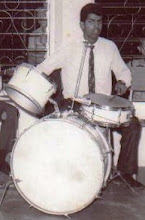
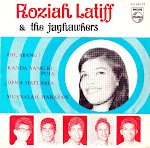
During my time in Negeri Sembilan I have literally “walked with beggars and dined with kings”. In the heydays of my bachelorhood period (1960’s) particularly, I had a lot of contact with the Negeri Sembilan royalty. The sons and daughters of the late Tunku Laksmana Nasir and their cousins were all my close friends being of about the same in age and musical disposition. For a time in the 1960’s, Tunku Laksmana Nasir was even the Regent of NS. This link was perhaps caused by my musical involvement in bands. The late Tunku Makmar ( Kudi) was the Tunku Laksmana’s son who played the piano and also the accordion alongside me in my early bands and even The Jayhawkers. We performed often at the palace and their royal homes for the many ubiquitous parties and dances that were so popular in those days. The late Tunku Alang Hanan always insisted on me coming along with him and his Kuala Pilah friends who included teachers, businessmen and even police officers and headmasters simply because I could sing and play the guitar to liven their frequent “meet-ups” to be read as drinking parties.

I have also been included in the royal entourage of the late Tuanku Munawir for his annual “mandi safar” outings at Ulu Bendol in 1964 and 1965. I was also often invited to the Istana Besar for Tuanku’s birthday celebrations. In those days liquor flowed and even a mini casino was set up for the celebrations. The family of the late Tunku Jamil (the elder brother of the first three Tunku Ampuans) and his wife the late Dato’ Tunku Fatimah were also close to me. Then there was Tunku Tolha, Tunku Hishammudin (Kuchik), Tunku Jaril (TJ), Tunku Faisal, Tunku Zubir who were all my friends. However, this link to the NS royalty and Seri Menanti sort of ended with the demise of the late Yam Tuan DYMM Tuanku Munawir in 1967. Thereafter, Seri Menanti and the royalty was made up of the family of the late Yam Tuan DYMM Tuanku Jaafar. I had little contact or friendship with this new royal family members as they had grown up mostly overseas. But I still kept contact with the other members of the NS royalty mentioned earlier.

I must also mention that while teaching in Tanjung Ipoh and Kuala Pilah between 1960 and 1975 I have also had many Seri Menanti Tunkus as my students. Some names that come to mind are Tunku Azahaniah, Dato Tunku Azman and the late Tunku Kamal ( Ben). I have met some of them in recent years and they too are in their retirement years. Soon thereafter in 1975, I moved on to become a music educator and moved out of Kuala Pilah district. I did meet the children of the late DYMM Tuanku Jaafar and her royal siblings at the Lake Club in KL when I used to perform there with the late Ahmad Wan Yet Combo but I was not recognized by any of them simply because we had never met. It was only twenty years later in the 1995 that I came to know and meet the kindly late DYMM Tuanku Jaafar who awarded me a P.J.K. award in recognition of my teaching service. I received two more awards from Tuanku for my active involvement in music associations and societies after my retirement – the Ahli Setia Negeri Sembilan (ANS) in 2000 and the Darjah Setia Negeri Sembilan (DNS) in 2004. During this brief period I would be invited to the Istana Besar for Tuanku’s birthday celebrations like old times.

The new Tuanku DYMM Tuanku Muhriz Ibni Almarhum Tuanku Munawir has always been a very low profiled prince. Many of his classmates from King George V school in 1962 are very close friends of mine. I had the pleasure of being introduced to him recently at the Patron’s Ball of The Royal Port Dickson Yacht Club.  


Friday, March 4, 2011

MAN VS WOMAN - A POEM - Anonymous


A WOMAN'S POEM:

Before I lay me down to sleep,
I pray for a man who's not a creep,
One who's handsome, smart and strong.
One who loves to listen long,
One who thinks before he speaks,
One who'll call, not wait for weeks.
I pray he's rich and self-employed,
And when I spend, won't be annoyed.
Pull out my chair and hold my hand.
Massage my feet and help me stand.
Oh send a king to make me queen.
A man who loves to cook and clean.
I pray this man will love no other.
And relish visits with my mother.

A MAN'S POEM:

I pray for a deaf-mute gymnast nymphomaniac with
Big tits who owns a bar on a golf course,
and loves to send me fishing and drinking.
This doesn't rhyme and I don't give a damn.

Tuesday, February 22, 2011

Citizens’ uprising mark the demise of political cartels and economic hoarding ......by By J. D. Lovrenciear


Indeed what we are witnessing in the Middle East region today signals a piercing, warning signal to the world that regimes guilty of economic hoarding and political cartels do not belong to the increasingly liberalising global environment.

Despite the police brutality and curtailing control mechanisms tightly in place, more and more countries are discovering that people’s willpower is no match.

Today, beginning with Tunisia and followed closely by Egypt, citizens there have shown the world that any amount of suppression and oppression is not able to imprison forever their passion for democratic equality and penchant for civil liberties.

If the media reports in the world are to be believed (assuming that these news bearers are not muzzled or harnessed by politicians with vested interest), the tide for change is bound to be spreading in a contagious manner from East to West, North to South.

Already Algeria, Bahrain, Iran and Yemen are beginning to experience people uprisings.

Triggered by increasing food prices, oppressive laws that curtail human dignity, inequalities in the equitable distribution of a nation’s wealth, concentration of power among those with vested and extreme interests – all of these have precipitated in the uprising by the common citizens.

Algerians under the pressure of rising basic food prices are crying out for the ouster of their eleven years reign President. Bahrain's King Hamad Isa al-Khalifa is giving out to every family USD 2,700 cash to quell unrest, seemingly. In Iran the hardliner President is seeing the wrath of tens of thousands as they clash with police. In Yemen the peope are up in arms against repression, corruption and economic conditions that only favour the rich and powerful.

What then would be the defining moments of truth for Malaysia? The answers lie in our political history of 53+ years.

Foremost, it is fortunate that the Tun Dr M2 did not cling to his premiership till this date. Unfortunately however, the cartel politics of Malaysia poses a contingent problem.

It has been a tradition within the political corridors to ensure that sons and daughters take over from where their fathers left. There is nothing wrong in this provided that the individual taking on the reigns is competent on his or her own merits. There is nothing wrong if the rakyat vote without manipulation an individual to take on the mantle.

But when politicking and strategic manoeuvring come into play, there is bound to be serious repercussions. In this New Age of a ‘Networked Society’ fuelled by the accelerating ‘Information Society’, cartel castles will be demolished.

Next, let us take a look at our socio-political fabric. After decades of affirmative policies, we still see inequalities in the economic pie sharing. For argument's sake let us assess the sitz-im-leben using race as an indicator:

• The number of Malays who are still in the marginally poor category is a shame.

• The number of young Malay youths who have fallen by the wayside of the nation’s human capital development is alarming. The old attribute of ‘Ahmad the driver’ is still prevalent. Just take a headcount of the number of unskilled workers comprising of pizza-delivery boys, dispatch riders, and mundane factory workers these past thirty years.

• The number of Malay youths who have fallen under drugs, street racing gambits and other vices is not hard to pinpoint.

• The numbers of Indian youths who are unable to find meaningful and gainful employment have taken to parang wielding gangsterism. The number of police arrests and custodial deaths can be a tip-of-the iceberg count.

• Vice dens can still be associated with the Chinese as legitimate and honourable avenues to be economically and financially rewarded have shrunk.

• In the name of higher profit margins we import millions of workers to harvest our palm oil, build houses and high-rise structures. Our own manpower is left in the lurch without becoming skilled workers who could form a formidable export industry in the future.

The economic factor under the label of NEP that we have prided these past thirty years seemed to be working pretty fine as we were told in the past. Attempts to question its quantum progress were quickly snuffed under the overwhelming threats of ISA and OSA or even the horrendous claim of ‘do not be anti-national’.

But truth always surfaces. Today we witness the number of poor Malaysians struggling to eke out a living on a RM3,000 and below monthly income.

Yes, we have made sure that everyone can have a car which they will be burdened to pay for over the next nine years. Yes we have succeeded in getting car owners to leave their cars at home and ride to work to save on their expenses.

Yes we have ensured that everyone can buy a roof over their heads provided they are in government employment or able to meet the monthly instalments that are scrutinized by the approving banks. And for the next fifteen to twenty years of your working life you slog to pay off the monthly rates.

Be it oil, sugar or rice – we are today at the mercy of rising food prices outside the borders of the country. The government can do nothing to alleviate the burden as rightly pointed out by a minister recently. Even our hugely US-export oriented trade and crude oil economy cannot save the ordinary rakyat from the ravages of world food shortage.

Yes we have great monumental buildings and spanking roads. But the rakyat on the road is worse off than when he lived in Indian Sentul, Chinese Jinjang or the humble Kampong Melayu forty years ago. Today the working soul has to pay for everything – from water, electricity, toll and parking to hospital visits and education. Never mind if he cannot even find a tiny plot to grow his own vegetables or be able to cast the net for some fish at the confluence of the KL-Klang rivers.

Seemingly, we have progressed. But our minds are closed with racism, religious discrimination and the chase after money, money, money and more money as the end all. Profiteering, hoarding and kickbacks are the rule of the economic game – be it the kedai runcit, the wholesaler, the contractor or the big time arms importer.

We are still battling after all these many decades on our education system. It is still the same old issue of Bahasa Malaysia versus English.

In a nutshell, if truly we have progressed as a nation of ONE people, advancing with the goodwill and honour of yesteryears, BN would not be battling its way to the polls today.

If truly we had no political cartels, we would not be seeing DSAI as a force to be contended with.

If truly we had an economy that was built on equitable distribution that emphasised the meaningful survival of the humble rakyat, we would not be questioning the notion of wealth accumulation which is the current trend among the powerful.

If truly we had our nation built on true democracy and exemplary civil liberties, we need not worry about the tides of change sweeping the world. In fact we will be party to promote change in the world for the better.

Time will tell viva Malaysia.

Monday, September 7, 2009

LET’S REMAIN BEAUTIFUL MALAYSIANS


Let's Remain Beautiful Malaysians
By : Joe Chelliah


I was fortunate to have been associated with Malaysia’s cultural plurality all my life. I have seen beautiful Malaysians for a major part of my life. Let us remain so and not get ugly.

Till about the 1980’s or so almost all Malaysians were simple and humble folks who clearly fitted the early British description of Malays as “nature’s gentlemen”. Malaysian humility was unbelievable and still remains so in the more rural areas. The Malays in particular were very soft spoken and also very mild mannered. Haughty and arrogant behaviors which can be more easily observed today amongst all Malaysians alike are a far cry from the day to day life-styles of the early Malayans and Malaysians.

Malays were softer spoken and level headed unless provoked with anything demeaning especially about Islam. They would also be greatly offended if you touch or smack their head or songkok (headgear). All Malayans led simpler lives untouched by the lure of unrestrained modern day consumer economics. Rulers and community leaders were well respected. Teachers, irrespective of race, were always a close second in terms of this kind of respect and endearment from one and all. In the 1960’s and 70’s teachers performed with much sincerity and a firm commitment towards students. Parents were wholly supportive of whatever teachers did to their children – even if the children were given a good whacking. This lasted till about the late 1970’s.

However, unlike earlier times the Malaysian economy began to see vast growth since the 1980’s. Politicians began meddling in just about every sphere of Malaysian life also around this time. The civil service slowly began to grow and also become almost entirely Malay with the urban drift that followed in the 1980’s. Today the “nature’s gentlemen” are a rare species. Many Malaysians have become a different sort of human species as compared to their simpleton forefathers. A new ugly Malaysian began to emerge together with this new found wealth.

Racial politics too began to permeate every sphere of Malaysian life as politicians began partisan politics. Armed with a Malay majority in the civil service, army and police the nature of Malays now began to change. Concepts like bumiputra (sons of the soil) came into vogue. The early Malays who adored the English were replaced by a new type of “hate the British colonialists” variety. History books were rewritten with an overtly nationalistic twist. Religion too started becoming a divisive factor amongst Malaysians. Hitherto unheard of non-Muslim festivals too started becoming more prominent as a direct consequence of Muslim posturing in Malaysia. As more money flowed in the national economy corruption began to have a field day. Even agencies such as the Ant- Corruption Agency were unable to check the growing corruption amsongst Malaysians.

The rift in ethnic relations was also becoming increasingly apparent. Non-Malays were increasingly not happy with the racial quotas and affirmative action for the Malays in almost all spheres of life. They began to grumble openly pertaining more towards the implementation aspects of such policies which did not really trickle down to the needy Malays. Affirmative action for Malays was initiated by the British long before Merdeka itself. It can be argued that the natives of any country should not suffer the same fate as the natives of the Americas, Australia, New Zealand, the Fiji Islands and even South Africa. However, there should be fairness to all in any affirmative action.

Non-Malays who were born and bred in Malaysia had also come to consider themselves as native to the land as time went by and have become uneasy with the affirmative action policies. I must say here as a fact that when I joined the teaching profession in 1960, the State Education Office of Negeri Sembilan could have easily passed of as an Education Office of Sri Lanka as it was staffed almost entirely by Sri Lankan Tamils – from the peon to the Chief Education Officer. But of course that is history and the situation has been corrected to the extent of over-correction today.

I attribute the much of the current unpleasant and deteriorating race relations in Malaysia to basic human greed. It’s all about economics. The gradual increase in per capita income and the onset of the economic policies that were accelerated since the early 1970’s favored the Malays more and has made it possible for a newly emergent middle class of Malays. The availability of education, particularly secondary education even in the most remote areas of Malaysia also aided the rise of the middle class which now began migrating to the urban areas of Malaysia in search of jobs. This brought about a change in the population demographics in Malaysia, particularly West Malaysia.

But in spite of all the developments that have taken place since Merdeka the rich have not been really affected too much adversely. They still live in the best neighborhoods, drive the best cars and live a life of luxury that middle class Malaysians, let alone the poor, can only dream about. They can and will leave the country if anything untoward were to happen here and live as comfortably anywhere in the world with their wealth. Governments and policies can change but the rich will remain unperturbed. However, the average Malaysian from laborer to tycoon is generally having a cushy life here compared with many other poorer countries in the world today. Even foreign workers in Malaysia get a little dose of this affluence.

We have come a long way from the early Merdeka years during which time the bulk of Malaysians were dirt poor in the kampongs and rubber estates. Even a bicycle was a luxury then as was eating out with the family. Only the affluent people ate apples, butter and jam while the bulk of the populace thrived on biscuits and roti kering. Today almost every working Malaysian has motorized transport and eats out of the home quite often at KFC, McDonalds or even Pizza Hut and these places are not cheap either. Even at 3 a.m. the 24 hour “mamak” eateries are well patronized. As long as this happens Malaysians are safe. Well fed people do not start revolutions.

In any case, as long as we remain a wealthy nation that we have become we may as well become beautiful again and strive to get rid of the “ugly Malaysian” image once again by just reverting to being the nice people our fore parents were.

Friday, October 31, 2008

Of Sharukh Khan and Datukships


I feel that there are many locals (veterans and youngsters) in the Malaysian entertainment industry who should be given priority. Some, like the late Kasmah Booty, the primadonna of early Malay movies, have passed away without any such recognition. Let us “ not feed the monkey in the jungle rather than feed our own child at home ” is an old Malay saying.


There has been much comment recently on the conferment of a datukship on Bollywood star Sharukh Khan by the Melaka state government. It is true that one cannot question the prerogative of any state to do so and it is not my intention to do this. However, the reasons highlighted for this particular recipient, focus solely on his so-called contributions to tourism and begs for comment.


It must be remembered that the choice of location to shoot any footage for a film is not the decision of the actor or actress on. This comes entirely under the purview of the producer and / or director as it is cost related. Actors are merely professionals paid to act wherever the producer or director decides.


Actually, many other stars from different countries including Hong Kong and the USA too have appeared in footage shot in Malaysia that prominently featured Malaysian scenery and iconic landmarks. Of late more Tamil rather than Hindi movies have been doing this. So do all these other Indian actors and actresses also qualify for a datukship as they are “promoting Malaysia” to the millions of overseas Tamil Indians worldwide? It is my view that most tourists visit Malaysia more to shop or see our diverse cultures and our fauna and flora - cultural tourists to be more exact.


Jackie Chan is an equally, if not a more, deserving recipient if we are to take the reasons given by the Melaka state government as a benchmark.. His films shot in Malaysia also mostly use rented local equipment and expertise unlike their Indian counterparts who use their own equipment and staff with no technique or technology spillover effect for our locals.

Many do not know that Pulau Tioman was the setting for Rodgers and Hammerstein 1958 production of "Bali Hai" in the Hollywood classic movie "South Pacific". Should the producer of this film too be honored even if it can only be done posthumously now as was the case with Tan Sri P. Ramli.


By Johami Abdullah

Thursday, September 25, 2008

PROGRESS TODAY UMBLICALLY CONNECTED TO ENGLISH LANGUAGE


As a retired English teacher of the 1960’s and 1970’s I am much dismayed by the systematic deterioration of English language proficiency in Malaysia. It began some time ago probably around the early 1980’s. We need not point fingers at this stage but embark with a high degree of emergency to rectify the situation. Let’s face it. The English language has an umbilical connection with progress in just about any field today.

Roman scholars learnt and improved upon Greek thoughts and did so through a knowledge of the Greek language undoubtedly. Later on , Europeans rushed to learn Latin to fathom the knowledge of the Romans. When the Arabs were carrying the torch of learning, scholars flocked to Baghdad, Cairo and Spain to learn from the Arab masters in, yes, Arabic.

All such efforts in no way affected their love and pride of their own mother tongue or nationality in their quest for mastery of a “foreign” language. With the rise of European knowledge and power since the Renaissance, the torch of learning passed on from the Arabs to the Europeans. Today USA is a leader in almost all fields in the arts and sciences together with Europe of which they are but an extension today. Japan learnt from USA and built up its technology and even managed to engage and win battles in WW II using the same technology learnt. These days Japan competes at par with Western powers in economics.
Jawaharlal Nehru, the great Indian nationalist patriot himself admitted that indeed “English is the window to the world”. Thus English is not disregarded in India and in this way Indian technocrats are highly respected worlwide.

If we are really keen to outshine our neighbors we must bring back English to its former status in Malaysia. No one could beat us in English at one time. Even serving British soldiers were amazed with our mastery of the English language. Just ask some of my ex-students who are now retiring or nearing retirement. I often meet many of them from Generals to simple clerks and even manual laborers. They all amaze me with their English language competence. Regretfully, I cannot say the same for our present generation though even if they are degree holders. Of course it is not their fault. They are merely victims of politicians, nationalists and policy makers.
So let’s get on with it instead of spending much time and money arguing about whether we should teach this or that subject in English or switch policies again and again. It has to be a holistic process to educate society to be proficient in English. There are simply no two ways to go about it.
By: Johami Abdullah @ Joe Chelliah


By Johami Abdullah

Thursday, February 28, 2008

MORE SPACE PLEASE


MORE SPACE PLEASE


Space is a very important factor for the healthy development of human emotions and overall well-being. Crowded housing areas can invite stunted mental and social health. It is estimated that 50% of our population will be urban based by 2010. Yes, it’s going to be much more crowded in our towns and cities. Housing lots have become much smaller and playing fields have literally disappeared in the last twenty years or so. Children now play in the streets. The token playgrounds that were built in some older housing estates times are neither functional nor big enough. Some are overgrown with grass with even snakes lurking in it.

Zoologist Desmond Morris, a former curator of the London Zoo mentions in his book The Naked Ape (1967) that,

“under normal conditions, in their natural habitats, wild animals do not mutilate themselves, masturbate, attack their offspring, develop stomach ulcers, become fetishists, suffer from obesity, form homosexual pair-bonds, or commit murder. Among human city dwellers, needless to say, all of these things occur.. . . . . . Other animals do behave in these ways under certain circumstances, namely when they are confined in the unnatural conditions of captivity. The zoo animal in a cage exhibits all these abnormalities that we know so well from our human companions. Clearly, then, the city is not a concrete jungle, it is a human zoo.”

City planners and those responsible for schools should begin to take note of this study. Bigger space has to be allocated for children and adults alike. Social problems and juvenile delinquency has been on the steady rise in the last twenty years or so. This can be seen as a consequence of the residential areas that offer little or no space for the children to run and play safely near their homes under watchful eyes of the parents.

In the 1950’s and 1960’s even housing areas assigned for menial workers in estates and the Public Works Department in towns were built in compounds with a playing field right in front of the rows of houses. All government quarters were also provided with playing fields and space for children nearby. In Seremban, such was the case at Melaka Road, Channer Road, Rifle Range Road and Rahang Square. We played games such as rounders and police and thieves besides cricket, football and hockey. It’s sad that such is not the case today. While the upper classes in our society have golf clubs and social clubs complete with swimming pools, tennis, squash and badminton courts for the family members it is sad that the majority of the population has no such luxury. Even the playing fields in the older and established schools have become smaller. The High School in Muar, for instance, had four fields in the 1950’s. Only two remain today even though the school population may have tripled.